


Upping Floors – Stack Blocks
4.118.00 Reviews
App Specs
- Version
- 1.0.9
- Updated On
- License
- $0.05
- Downloads
- 10,000+
- Developer
- Quantic Bit
- Categories
- Arcade
- Platform
- Android
Screenshots



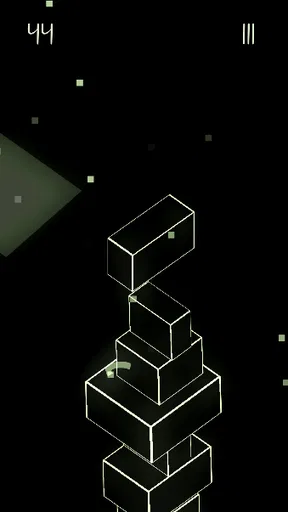
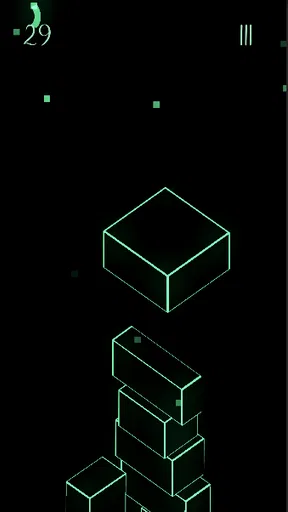
 Analysis by AppCompare
I approached Upping Floors expecting a small arcade game built around one clear idea: place blocks, keep the stack stable, and see how high I can go. That expectation is exactly what makes it appealing. It does not ask me to learn a complicated world, manage a long campaign, or understand a large collection of menus before playing. The focus is immediate, and the store summary captures that central challenge without needing a long explanation.
Developed by Quantic Bit, this is a compact game for players who enjoy short attempts and simple rules with room for careful improvement. It belongs to the arcade category, carries an Everyone age rating, and costs $0.05. That price makes it easy to treat as a low-cost experiment rather than a major purchase, especially if I want something I can open for a brief break.
My overall impression is that the appeal depends on whether I enjoy repeating a straightforward action while trying to become more accurate. If I want a quick stacking challenge, the premise is easy to understand. If I expect a large amount of content, deep progression, or a variety of modes, I would look elsewhere. The game’s strength is its narrow focus, and its limitation is the same thing.
What the first launch feels like
The first useful thing to know is that this is not the kind of arcade title I would install for a long introductory sequence. The concept is readable almost immediately: the blocks are the important objects, the tower is the goal, and each placement affects the next one. That makes the opening approachable for someone who does not usually play mobile games.
On a phone, I would start by keeping my attention on the current block rather than on how tall the tower might eventually become. That small change in mindset matters. Looking too far ahead can make a simple placement feel more complicated than it is. I found it more comfortable to treat each block as one separate decision, then reassess the new top surface before attempting the next move.
The game is best understood as an arcade reflex-and-control exercise, not as a construction simulator. I am not designing a building in a free-form way. I am responding to the movement and timing of the pieces, trying to preserve a usable stack. That distinction helps set the right expectations before installing it.
Quantic Bit keeps the premise compact enough that a first-time player can understand the objective without studying instructions. The trade-off is that the experience may feel sparse to anyone who prefers story, unlocks, missions, or several distinct activities. I would recommend it to a player who likes a repeated challenge that can be understood in seconds, rather than to someone searching for a broad arcade collection inside one game.
Worth Reading Before You Choose

Switching to Android Auto Means Rethinking Your Driving Routine

Google Calendar Makes a Crowded Week Easier to Manage

Baby Panda World Brings Quick Play to Modern Phones, but Its Game Library Feels Busy

ESPN’s Live Game View Makes Following Close Games Easier

QuizzLand Review: A Good Fit for Short Trivia Breaks, Not Every Player

Basketball Stars: Multiplayer Is Fast, but Can It Recover When Matches Go Wrong?
Getting started without overthinking the setup
The game runs on devices using Android 6.0 or later, so it is accessible to people with older compatible phones as well as newer models. Its current version is 1.0.9. After installation, I would go straight into the main play experience instead of looking for a large settings area or expecting a tutorial campaign. The most useful preparation is simply to hold the phone comfortably and make sure the screen is easy to watch.
Because stacking is a visual task, screen position matters more than it might in a menu-heavy game. I prefer to play with the phone steady in both hands or resting on a surface, especially during a serious attempt. A loose grip can make a quick input feel less controlled, while a stable position lets me concentrate on the block’s alignment.
A practical first-session routine is to play a few attempts without chasing a personal best. I use those early tries to learn the rhythm of the movement and to notice how forgiving the placement feels. This is more useful than assuming that every failed stack means I misunderstood the rules. Arcade games often require a short adjustment period, and this one is easier to judge after I have seen several placements.
The small price also affects how I evaluate the setup. At $0.05, I am not making the same commitment as I would with a premium game costing several dollars. Still, a low price does not automatically make every experience worthwhile. The real question is whether I enjoy the central loop enough to return after a failed attempt. For me, that is the deciding test.
The first meaningful success
My advice for a first successful run is to stop trying to be fast. Watch the block’s position, wait for the moment that looks easiest to judge, and make the placement with a deliberate input. The goal of the first session should not be an impressive tower. It should be learning what a controlled placement feels like.
Once a block lands, I would immediately check the new top area before thinking about the next move. A tower that looks acceptable from a distance can still leave a less convenient surface for the following piece. This creates a useful habit: every placement is both a result and the starting condition for the next decision.
One of the less obvious lessons is that consistency is more valuable than occasional bravery. A risky placement may produce a temporary gain, but a careful approach gives me more chances to understand the game. When I was learning, I found it helpful to define success as reaching a stable rhythm rather than simply surviving as long as possible.
Another useful approach is to use failed attempts as calibration. If I repeatedly miss on one side, I should not instantly blame the controls. I can first adjust my timing, grip, and viewing angle. Small physical changes can make a noticeable difference in a game where the entire challenge is concentrated into block placement. This is the kind of practical learning that a short store description cannot explain.
For a child or a casual player, the first success can be reassuring because there is no need to understand a complicated system before making progress. For an experienced arcade player, the same simplicity may feel familiar rather than surprising. In both cases, the satisfaction comes from improving control over a very limited set of actions.
Where new players can become confused
The main possible confusion is mistaking a simple objective for an effortless game. “Stack the blocks” sounds easy, but the challenge is not understanding the goal; it is maintaining accuracy as the tower develops. A player may know exactly what to do and still need several attempts before the timing feels natural.
I would also avoid judging the game from one unsuccessful attempt. A single miss does not tell me whether the game is fair or enjoyable. It may reflect an unfamiliar rhythm, an awkward grip, or a decision made too quickly. Giving myself a short run of attempts provides a much clearer picture of the controls.
Another point worth clarifying is the difference between height and quality. Reaching a taller stack is satisfying, but a stable sequence of placements is the more useful measure during the learning phase. If I focus only on the final height, I can become impatient and start forcing moves. If I focus on repeatable timing, the height tends to follow naturally.
Players who are used to arcade games with constant visual effects, power-ups, or multiple objectives may find this experience restrained. That is not necessarily a flaw, but it is a real trade-off. The game’s identity comes from reducing the action to stacking, so anyone wanting more variety should choose a broader alternative in the arcade category.
It is also not my first choice when I want a relaxing game with no pressure. Even a minimal stacking challenge can become tense when a tower is already high. I would choose it for a short concentration break, not for background play while watching something else. Divided attention undermines the exact precision the game asks for.
How it fits into everyday play
A realistic use case is a short wait at a bus stop or between appointments. I can open the game, make a few attempts, and put the phone away without needing to remember a storyline or recover a complicated position. That makes it more convenient than a longer arcade adventure when I only have a small amount of free time.
It can also work as a quick reset after a frustrating task. The rules are narrow enough that my attention moves away from email, work, or study and toward one immediate visual problem. I would not call that deep relaxation, because the stacking can become demanding, but it is a focused distraction with a clear beginning and end.
For families, the Everyone rating makes the game broadly suitable from an age-classification perspective. I would still introduce it by explaining that the point is practice rather than instant perfection. Younger players may enjoy the visible tower, while adults may appreciate the short attempts. The best shared approach is to compare strategies or take turns, rather than treating every failed placement as a problem.
The game’s audience is narrower than its simple presentation might suggest. It is a good match for people who enjoy repetition, timing, and incremental improvement. It is less suitable for someone who needs a strong sense of discovery or a changing set of objectives to stay interested. Knowing that before downloading saves disappointment later.
What makes the loop work, and where it falls short
The central loop works because the objective is visible at all times. I do not need to remember a quest or inspect a map. The growing stack itself shows whether my decisions are helping. That direct feedback is ideal for mobile play, where a game often needs to communicate its purpose quickly.
The strongest part, in my view, is the way each placement carries forward. A careless block does not just affect the current moment; it can make the next placement harder. That gives the simple action a little more strategy than the premise first suggests. I am continually balancing immediate success against the condition I leave for the next block.
The limitation is that the same structure can become repetitive. If I am not motivated by improving my timing, I may feel that I have seen the whole experience quickly. The game does not need to be expansive to be enjoyable, but it does need the player to value refinement. This is why I would describe it as a focused arcade tool rather than a complete long-form game.
Compared with a typical endless runner, Upping Floors asks for less movement variety but more attention to one precise interaction. An endless runner may offer changing obstacles and a stronger sense of forward travel, while this game gives me a quieter, more concentrated challenge. Compared with a physics puzzle, it appears more immediate and less concerned with solving a designed level. The choice depends on whether I want reflexive repetition or a sequence of different problems.
Compared with a larger stacking game, the appeal here is the low barrier to entry. I do not need to learn a collection of special blocks or systems before I can begin. The trade-off is obvious: a broader stacking alternative may provide more variety and longer-term goals. I would choose this title when I want the smallest possible version of the stacking idea, not when I want a feature-rich substitute for a full arcade library.
Small habits that improve the experience
I recommend using a consistent posture for serious attempts. If I play with the phone held at a different angle every time, I make it harder to judge the block’s position. Keeping the display at a familiar distance turns the challenge into a test of timing rather than a test of constantly changing visibility.
I also try to pause mentally after each placement, even if the game’s pace encourages immediate action. That brief reset prevents me from carrying the previous move into the next one. The top of the tower is the new situation, and treating it that way reduces impulsive decisions.
A third habit is to separate experimentation from record attempts. During experimentation, I may deliberately try a different timing or hand position to learn how the game responds. During a record attempt, I return to the method that feels most reliable. Mixing those two goals can make a failed experiment feel more discouraging than it needs to be.
Finally, I would stop a session when I notice that I am rushing. The game is inexpensive and quick to reopen, so there is little benefit in forcing attempts while tired or distracted. A short break often helps more than repeatedly making the same hurried mistake. The best progress comes from controlled repetition, not from playing angrily until the next block lands.
Who should install it
I would recommend this game to someone who wants a tiny arcade challenge with an instantly understandable goal. It suits quick sessions, older compatible Android devices, and players who enjoy seeing their own control improve. The average rating is 4.1 from around 211 ratings, and the game has passed 10K installs, which suggests that it has found an audience among people interested in this kind of compact experience.
I would skip it if my priority is a story, character progression, multiplayer competition, or a wide selection of modes. I would also choose another game if I dislike repeating attempts after mistakes. The low price lowers the risk of trying it, but it cannot change the basic nature of the experience: it is a focused stacking game, not a broad entertainment package.
Before installing, I would ask myself one simple question: do I enjoy chasing a cleaner result from a small set of actions? If the answer is yes, the game has a clear reason to be on my phone. If I need constant novelty, the same simplicity that makes the first launch friendly may make the later sessions feel limited.
My recommendation after testing the idea
Upping Floors – Stack Blocks works best when I treat it as a pocket-sized concentration challenge. Its installation path is uncomplicated, the first objective is clear, and the first meaningful success comes from slowing down enough to understand the placement rhythm. I appreciate that I can begin without learning a large system, while I also recognize that the narrow loop will not satisfy every arcade player.
Quantic Bit has chosen a modest concept and kept the focus on it. That gives the game an approachable character, especially for a first-time user who wants to know what to do within moments of opening it. The cost of $0.05 makes trying it easy, and the Everyone rating broadens its suitability, but the real value depends on whether careful stacking is the kind of repetition I find rewarding.
My final advice is to give it a short, patient first session rather than making a decision after one miss. Keep the phone steady, watch the current block, reassess the tower after every placement, and use early attempts to learn instead of chasing a perfect result. If that process feels satisfying, this small arcade game can become a handy way to fill a spare minute. If it feels repetitive from the start, a more varied arcade alternative will be a better use of your time.
Pros
- Simple one-touch controls make it easy to start playing immediately.
- Short rounds are ideal for quick breaks or casual sessions.
- Increasing speed keeps the stacking challenge engaging over time.
- Minimalist visuals keep the gameplay clear and distraction-free.
- Works well for players who enjoy improving their personal high score.
Cons
- Gameplay can feel repetitive after extended sessions.
- Precise timing becomes difficult as the tower grows faster.
- Mistakes may reset progress
- which can feel frustrating.
- Limited variety may reduce long-term appeal for some players.
- Ads may interrupt the experience
- depending on the app version.
FAQs for Upping Floors – Stack Blocks
What is Upping Floors – Stack Blocks?
Upping Floors – Stack Blocks is a casual stacking puzzle game in which you place and balance blocks to build increasingly tall structures. The gameplay is easy to understand, but accurate timing becomes more important as the tower grows. It is designed for short, relaxing sessions and offers a simple challenge for players who enjoy reflex games, score chasing, and minimalist arcade experiences.
How do you play Upping Floors – Stack Blocks?
The main objective is to stack each incoming block on top of the previous one while keeping the structure stable. You generally need to tap at the right moment to drop or position a block. A well-aligned placement helps the tower grow, while inaccurate moves can reduce the usable surface or make the structure collapse. Progress depends on timing, patience, and maintaining a steady rhythm.
Is Upping Floors – Stack Blocks free to download and play?
Upping Floors – Stack Blocks is typically available as a free download, allowing users to try the core stacking gameplay without paying upfront. However, availability of advertisements, optional purchases, or other monetization features may depend on the version and platform. Before downloading, it is worth checking the official store listing for current pricing, in-app purchase details, and any device-specific conditions.
Can Upping Floors – Stack Blocks be played offline?
The basic stacking gameplay may be suitable for playing without a constant internet connection, which makes the game convenient for travel, waiting rooms, or quick breaks. Nevertheless, some features such as advertisements, leaderboards, cloud services, updates, or purchase verification can require internet access. For the most accurate information, test the installed version and review the developer’s current store description.
Is Upping Floors – Stack Blocks suitable for children and casual players?
The game’s straightforward controls and simple stacking concept make it accessible to casual players, including users who do not usually play complex mobile games. It can also help develop timing and concentration through repeated attempts. Parents should still review the app’s age rating, advertising policy, and in-app purchase settings, since these details can vary between Android and iOS versions and may change after updates.


